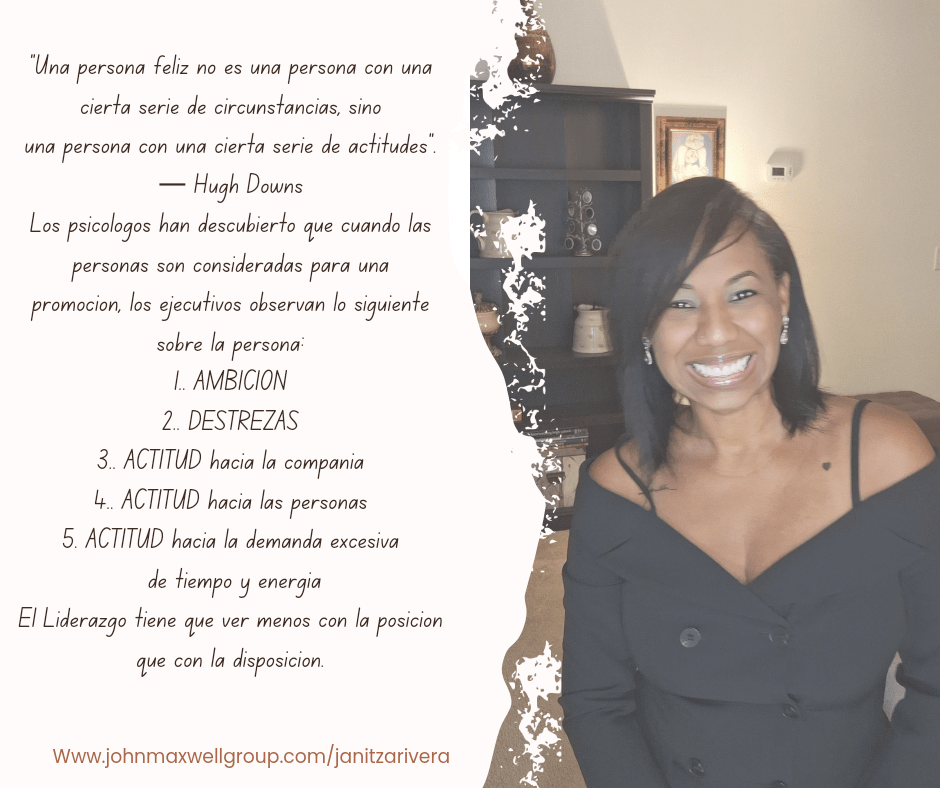
Una persona feliz no es una persona con cierta serie de circunstancias, sino una persona con cierta serie de actitudes”. — Hugh Downs Los psicólogos han descubierto que cuando las personas son consideradas para una promoción, los ejecutivos observan lo siguiente sobre la persona: 1.. AMBICIÓN 2.. DESTREZAS 3.. ACTITUD hacia la compañía 4.. ACTITUD hacia las personas ACTITUD hacia la demanda excesiva de tiempo y energía El Liderazgo tiene que ver menos con la posición que con la disposición.
👀 Discovering your why is an intensive process. You have to ask and answer a lot of questions, and in the end you still have to figure out a way for your why to impact what you do. But there’s no more significant step for helping you live a life that truly matters.
Five benefits to finding your why: ✍️ Knowing Your Why Gives You Freedom — You have to find yourself in order to lose yourself. ✍️ Understanding your why gives you freedom to serve other people and make a significant contribution to your world.
✍️ Living Out Your Why Gives You Confidence — our why creates security and comfort for you in everything you do. When you have confidence, other people take notice of you and want to figure out why you’re different.
✍️ Layering Your Why Gives You Momentum — There’s a deep connection between your strengths your why. The more you work out of your strengths in pursuit of your why, the more you increase both.
✍️ Consistently Living Your Why Gives You Impact — Living out your why on a daily basis creates a compounding effect for your reputation and results, giving you a greater impact on your world.
✍️ Knowing Your Why Gives You Longevity — Your why is your motivation to make every day count, no matter your age. It provides you with the necessary fuel to live until you die.
Which benefit appeals to you most — freedom, confidence, momentum, impact or longevity? Why?
“Uno de los mejores lugares para empezar a cambiar tu vida es haciendo lo que sea que aparezca en tu lista mental de “debería””. — Jim Rohn
El catalizador número uno para el cambio es la acción. En la vida, no es lo que obtenemos lo que nos hace valiosos. Es en lo que nos convertimos en el proceso que aporta valor a nuestras vidas. La acción es lo que convierte los sueños humanos en significado. Eso trae valor personal que no podemos obtener de ninguna otra fuente. ✍️ Hay cuatro beneficios de tomar medidas para vivir intencionalmente: 🔸️ Reafirmar tus valores: Actuar según lo que valoras aclarará esos valores y convertirlos en una prioridad permanente. 🔸️Encontrarás tu voz: Tendrás la confianza para hablar y vivir lo que crees frente a los demás y comienzas a desarrollar autoridad moral. 🔸️Desarrollarás tu carácter: Las personas pasivas permiten que su carácter sea influenciado por otros. Las personas activas trabajan para formar y mantener su propio carácter, y crecer y desarrollarse gracias a ello. 🔸️Experimentarás satisfacción interior: La satisfacción se encuentra en estar donde estás. La satisfacción se encuentra cuando tus acciones están alineadas con quién eres.
¿Cuál de estos cuatro beneficios te atrae más y por qué?
How Your Story Changes You
“One of the best places to start to turn your life around is by doing
whatever appears on your mental ‘I Should’ list.”
— Jim Rohn, Entrepreneur and Speaker
The number one catalyst for change is action. And the first thing changed when you
act is yourself.
In life, it’s not what we get that makes us valuable. It’s what we become in the process that
brings value to our lives. Action is what converts human dreams into significance. It brings
personal value that we can gain from no other source.
There are four benefits of taking action to live intentionally:
You Will Re-Affirm Your Values — Acting on what you value will clarify those values
and make them a permanent priority.
You Will Find Your Voice — You will have the confidence to speak and live out what
you believe in front of others, and begin to develop moral authority.
You Will Develop Your Character — Passive people allow their character to be
influenced by others. Active people work to form and maintain their own character
and grow and develop because of it.
You Will Experience Inner Fulfillment — Contentment is found in being where you
are supposed to be. It’s found when your actions are aligned to who you are.
Which of these four benefits appeals to you most and why?
Janitza Rivera
Executive Business Coach
The Positive thinking that typically comes with optimism is a key part of your emotional Intelligence. Why? Because emotional Intelligence involves managing emotions is a positive, optimistic way with a positive mindset.
Having a positive outlook does not mean denying difficult emotions or ignoring the challenging aspects of life. Positive thinking means that you approach the difficulties in a more positive and productive way.
“Positive thinking is not just the feeling you have when good things are happening in your life- when it is easy to feel optimistic. It is about being able to maintain that feeling of hopefulness and motivation, whatever is happening.” Sue Hadfield
God bless 🙌
Janitza Rivera
Executive Business Coach
Que el año en curso esté lleno de opciones para crecer, para compartir amor y amistad y para contribuir al bienestar de los demás, que el 2024 esté lleno de alegría, paz y prosperidad y que en cada paso que demos encontremos significado y un propósito de vida ❤️
Organizar tus cosas, recoger la basura, poner sábanas limpias, barrer, perfumar, preparar café o te, o lo que gustes, es una señal que le dice al Universo: He vuelto a empezar. Inspirame. 🤎
Hay muchas personas que no lidian con su dolor de la manera correcta. Lo encierra y tratan de ser fuertes por amor a los otros, pensando que no les está permitido estar tristes o que no tienen tiempo para salir de la rutina para lidiar con su dolor como es debido. Pero puedo decirte con toda confianza, que incluzo hay personas que dependen de ti, incluso cuando la vida tiene que continuar y tu tienes que seguir adelante, tiene que haber un momento para lidiar con el dolor. Ruegale a Dios que te ayude con tu dolor. Él es muy bueno consolandote y restaurandote la esperanza mientras oras. Antes de que te des cuenta, otra vez estaras siguiendo con tu vida e incluso, disfrutandola. Vas a encontrar tu ritmo y abrazaras la vida que habias conocido.
Una de las cosas que aprendí acerca del dolor es que uno no pierde la persona, o el sueńo, o cualquier cosa que haya perdido todo en un dia. Uno lo pierde a él,o a ella, o eso gradualmente, a medida que la vida continua. Cuando uno ve algo que le recuerda aquello que perdió, siente dolor. Cuando uno ve algo que trae recuerdos a su mente, siente dolor. Es por eso que el primer ańo después de una perdida es tan difícil: la primera Navidad, el primer cumpleańos, el primer aniversario, el primer concurso…muchos primeros que no se parecen a lo que eran.
Thank you for persisting. Thank you for not giving in on those dark & negative thoughts. Thank you for choosing to keep going. Thank you for giving yourself another opportunity to try again. Thank you for choosing to continue. You are loved, the world needs you. Thank you.
LA ASERTIVIDAD es una parte inherente de ser emocionalmente inteligente; La ASERTIVIDAD es una cualidad permanente e inseparable de la Inteligencia Emocional. Así como la Inteligencia Emocional se ocupa de poder identificar y gestionar tus sentimientos, ser asertivo también implica identificar y gestionar tus sentimientos. De manera directa, honesta y apropiada. LA ASERTIVIDAD implica expresar tus sentimientos, pensamientos, opiniones, necesidades y deseos. Cuando eres asertivo, eres capaz de defenderte a pesar de los miedos y la ansiedad que puedas sentir. Cuando eres asertivo, animas a los demás a ser abiertos y honestos acerca de sus puntos de vista y sentimientos. Esto ayuda a crear y desarrollar empatía y comprensión mutua. Y eso es Inteligencia Emocional. Ser asertivo es una forma de comunicarse y comportarse. Para desarrollar tu Inteligencia Emocional, es útil ser consciente de otras formas de comportarte y comunicarte; agresivo, pasivo y pasivo agresivo. Cada forma de comportarse y comunicarse tiene un sentimiento particular asociado y puede encontrarse con diferentes respuestas. Por otro lado, cuando eres asertivo, eres consciente de los sentimientos, necesidades y deseos; propio y ajeno.
ASSERTIVENESS is an inherent part of being emotionally intelligent; ASSERTIVENESS is a permanent and inseparable quality of emotional Intelligence.
Just as emotional Intelligence is concerned with being able to identify and manage your feelings, being assertive also involves identifying and managing your feelings. In direct, honest, and appropriate ways.
ASSERTIVENESS involves expressing your feelings, thoughts, opinions, needs, and wants. When you are assertive, you are able to stand up for yourself despite any fears and anxiety you might be feeling.
When you are assertive, you encourage others to be open and honest about their views and feelings. This helps create and develop empathy and mutual understanding. And that’s Emotional Intelligence.
Being assertive is one way to communicate and behave. To develop your emotional intelligence, it’s helpful to be aware of other ways of behaving and communicating; aggressive, passive, and passive aggressive. Each way of behaving and communicating cone with particular feelings attach to it and may be met with different responses.
In other hand, when you are assertive, you are aware of feelings, needs and wants; your own, and other people’s.








 Let's Be Real Authentic with Janitza