What To Do In Your 20s

  1. Release yourself from the pressure of trying to discover the plan for the rest of your life. Much of life is out of your control. What is in your control is to figure out what to do next.
  2. Show up on time. Do your very best where you are. Honor and serve people well.
  3. Move in the direction of your strengths. If I were to ask you what your Top Five Strengths are, would you know?
  4. Don’t place too much value on what a college admission board thinks of you. I am all for college but whether you get into the right one or not won’t determine your fate or future.
  5. Don’t just say thank you. Write ✍ it. Write the people who help you a handwritten thank you note. Don’t limit this to your career either.
  6. Abhor financial debt. Your 20s is an opportunity to set up your 30s and your future with financial strength. A way to do this is to read one financial book a year.
  7. Do life with Iron-sharpeners. Iron sharpens Iron. So one person sharpens another. Proverbs 27:17 Do life with people who elevate your thinking and give you an example to follow.
  8. Develop a consistent exercise routine. Bad news, your body will give a rude awakening when you hit your 30s. Is better to develop that discipline now.
  9. Build your personal network. Who you know is often more important than what you know. Your personal network is tied to your personal net worth.
  10. Meet quarterly with an older, wiser mentor.
  11. Practice humility. Think of others first. Practice humility daily.
  12. Look up and around more than down. This is a reference to your technology use.

What to do next is an excellent read by Jeff Henderson. I love getting his weekly emails and love to be able to share them with others.
Que hacer a los 20s
1.De la presión de tratar de descubrir el plan para el resto de tu vida. Gran parte de la vida está fuera de tu control. Lo que está bajo tu control es averiguar qué hacer a continuación.
2. Preséntese a tiempo. Haz tu mejor esfuerzo donde estés. Honra y serve bien a la gente.
3. Muévete en la dirección de tus puntos fuertes. Si tuviera que preguntarle cuáles son sus cinco fortalezas principales, ¿lo sabría?
4. No le dé demasiado valor a lo que la junta de admisión a la universidad piensa de ti. Estoy completamente a favor de la universidad, pero si ingresas a la correcta o no, no determinará tu destino o futuro.
5. No se limite a decir gracias. Escríbelo ✍. Escribe a las personas que te ayudan una nota de agradecimiento escrita a mano. No limites esto a tu carrera tampoco.
6. Aborrece la deuda financiera. Tus 20 años son una oportunidad para configurar tus 30 y tu futuro con solidez financiera. Una forma de hacer esto es leer un libro financiero al año.
7. Vive la vida con afiladores de hierro. El hierro afila el hierro. Entonces una persona agudiza a otra. Proverbios 27:17 Haz la vida con personas que eleven tu pensamiento y te den ejemplo a seguir.
8. Desarrolle una rutina de ejercicio constante. Malas noticias, tu cuerpo tendrá un duro despertar cuando llegues a los 30. Es mejor desarrollar esa disciplina ahora.
9. Construya su red personal. A quién conoces suele ser más importante que lo que sabes. Su red personal está ligada a su valor neto personal.
Reúnete trimestralmente con un mentor mayor y más sabio.
10. Practica la humildad. Piensa primero en los demás. Practica la humildad a diario.
11. Mire hacia arriba y alrededor más que hacia abajo. Esta es una referencia a su uso de la tecnología.

Qué hacer a continuación es una excelente lectura de Jeff Henderson. Me encanta recibir sus correos electrónicos semanales y me encanta poder compartirlos con los demás.

Janitza Rivera

Executive Business Coach

The First Impression Can Seal The Deal

Charisma, plainly stated, is the ability to draw people to you. And like other character traits, it can be developed. To make yourself the kind of person who attracts others, you need to personify these pointers:


1. Love life: People enjoy leaders who enjoy life. Think of the people you want to spend time with. How would you describe them? Grumpy? Bitter? Depressed? Of course not. They are celebrators, not complainers. They are passionate about life. If you want to attract people. You need to be like the people you enjoy being with.


2. One of the best things you can do for people-which also attracts them to you is to expect the best of them . If you appreciate others, encourage them, and help them reach their potential,  they will love you for it.


3. Give them hope: Hope is the greatest of all possessions.


4. Share yourself: People love leaders who share themselves and their life journey.  As you lead people, give yourself. Share wisdom, resources, and even special occasions.

When it comes to charisma, the bottom line is othermindedness. Leaders who think about others and their concerns before thinking of themselves exhibit charisma.

God Bless you,

Janitza Rivera

Executive Business Coach
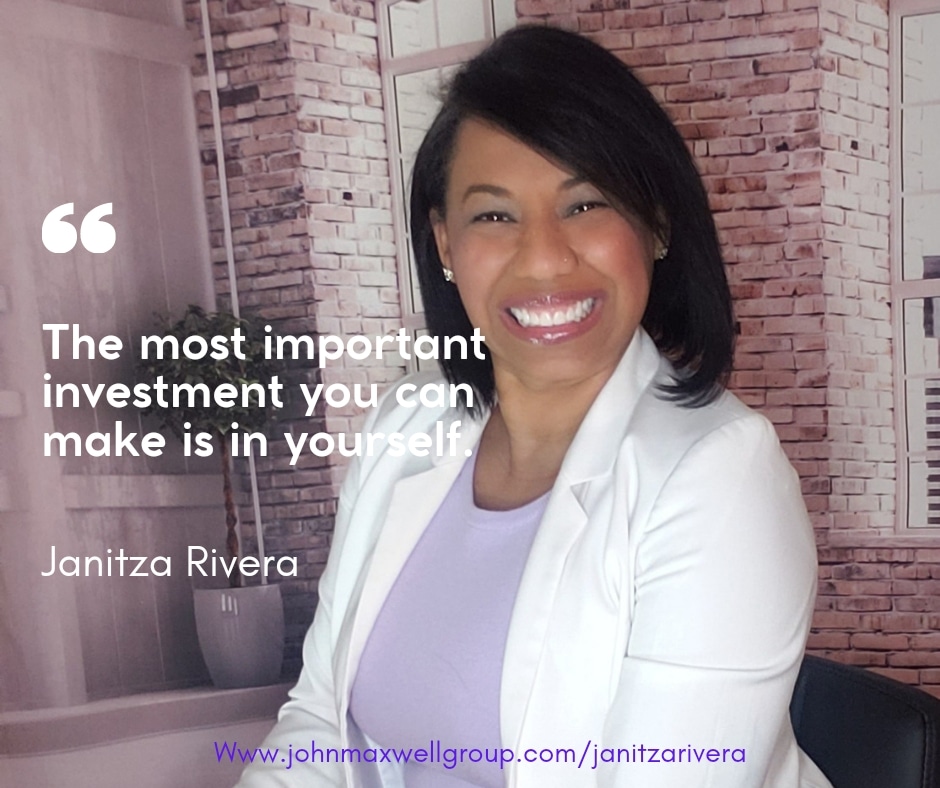
See Value In Yourself

You must see value in yourself before you add value to yourself. Self image will determine more than anything else how much you will invest in yourself. Why is it important for you to add value to yourself? Because you can’t give what you do not have. When you get better you can help others get better. Your personal development is the belief that you are worth the effort, time, energy that is needed to develop yourself.

Know your value so you can make the choice to not sell yourself short.

Debes ver valor en ti mismo antes de agregar valor a ti mismo. La imagen propia determinará más que cualquier otra cosa cuánto invertirás en ti mismo. ¿Por qué es importante para ti agregar valor a ti mismo? Porque no puedes dar lo que no tienes. Cuando te mejores, puedes ayudar a otros a mejorar. Su desarrollo personal es la creencia de que vale la pena el esfuerzo, el tiempo y la energía necesarios para desarrollarse.
Conozca su valor para que pueda tomar la decisión de no venderse corto.

Janitza Rivera

Executive Business Coach
The Path Question. Do I Have A Strategy To Reach My Dream?

Do you have a strategy to reach your dream? How do you answer the pathway question? Are you trying to work it out? There is no magic power in having a dream. You can’t just wait for it. You have to work for it. And you have to have a strategy that gives direction and focus to that work.
A strategy is as important a part of the dream as the dream itself.

When I want to create a plan to achieve a dream,  I have to start by creating my position in the process… You need to know your present position. Where am I right now? I have to be honest with my present situation.  A strategy is first trying to understand where you sit in today’s world.  Not where you wish you were or where you hoped you would be, but where you are. Then is trying to understand where you want to be 5 years out. This is exactly what I did when I turned 40 years old however you never late to do this.

“Everyone who got to where they are had to begin where they were.”

You need to understand your future position. Put into words where you want to go. When you identify your future position it gives you direction and motivation to go after your dream.

Never forget to understand the position you are in between.  What steps must you take to get from your present position to your future one. You must set a series of small goals to get where you want to go.

Know that life and the pursuit of dreams are messy. Creating the process is a start, and it gets you going, but it is far from being an exact science. 

Setting realistic goals is one of the hardest things to do, because you don’t always know exactly where you are going, and you shouldn’t. For me setting goals was to go to school and finish everything I have studied in a timely manner. But I have never stopped learning. Once you state your positions know that you need to start doing.

The real difference between a dream and wishful thinking is what you do day to day.

Janitza Rivera

Executive Business Coach
Passion

Experts spend a lot of time trying to figure out what makes people successful. They often look at people’s credentials, intelligence, education, and other factors. But more than anything else, passion makes the difference.

Nobody can be successful unless he loves his work.

There are four truth about passion:

1. Passion is the first step to achievement: Your desire determines your destiny.

2. Passion increases your willpower: There is no substitute for passion. It is fuel for the will. If you want something badly enough, you can find the willpower to achieve it.

3. Passion changes you: If you follow your passion, you can not help becoming a more dedicated, productive person.

4. Passion makes the impossible possible: A leader with great passion and few skills always outperforms a leader with great skills and no passion.

Is passion a characteristic of your life?

Janitza Rivera

Executive Business Coach

Initiative

Leaders must show initiative.  They most always look for opportunities and be ready to take action.
There are four qualities that leaders possess and these qualities enable them to make things happen.

1. They know what they want: If you are going to be an effective leader,  you’ve got to know what you want. That’s the only way you’ll recognize opportunity when it comes.
2. They push themselves to act: Initiators do not wait for other people to motivate them.
3. They take more risks: Proactive people always take risks. One of the reasons good leaders are willing to take risks is that they recognize there is a price for not initiating too.
4. They make more mistakes: The good thing about initiators is that they make things happen.  Even though initiating leaders experience more failure,  they don’t let it bother them.

Are you an initiator? Are you constantly on the lookout for opportunity,  or do you just wait for it to come to you?

“Even the right desicion is the wrong desicion if it is made too late.”

Former Chrysler Chairman Lee Iacocca

Start Small But BELIEVE Big

I hope you understand that we can’t get anywhere in life without taking that first small step. Sometimes the step is HARD; other times it’s easy. But no matter what you have to do it if you want to achieve big things.

You never know when something small that you do for others is going to expand into something big.

The thing here is that you need to start where you are. Opportunity is always where you are. Be willing to start by giving of yourself.

Start with your one thing. I believe everybody has one thing they do better than anything else. When you start on your one thing it will lead you to where you want to be.

Start watching your words. Words kill, words give life; they are either poison or fruit, you choose. What we say to ourselves either encourages us or discourages us. The words we need to embrace are positive, words such as, we, can, will, and yes. What do we need to eliminate? Me, can’t, won’t and no. Words have power. What kind of words do you use in your mind as you talk to yourself, out loud as you speak with others, and in your writing? Are they positive and encouraging? Do they encourage you to embrace a bigger vision? Or are they holding you back? Are they preventing you from doing small things that can ultimately make a big difference? Don’t tell yourself that what you can do doesn’t matter. It does.

Start by making small changes. Change can be difficult, but it becomes easier when you do it a little at a time. Try to change 5% a day by asking yourself a question, If I were 5 % more responsible today, what would I be able to do? This kind of thinking help us to embrace incremental change.

Believe big. If you don’t believe you can do something, guess what? You won’t. No matter how talented you are, how many opportunities you receive or how many resources you have at your fingertips. YOU HAVE TO BELIEVE .

🤚 Do you believe in yourself? Your belief will drive your behavior. You will never be more than how you see yourself. 🤚

God Bless,

Janitza Rivera

Executive Business Coach

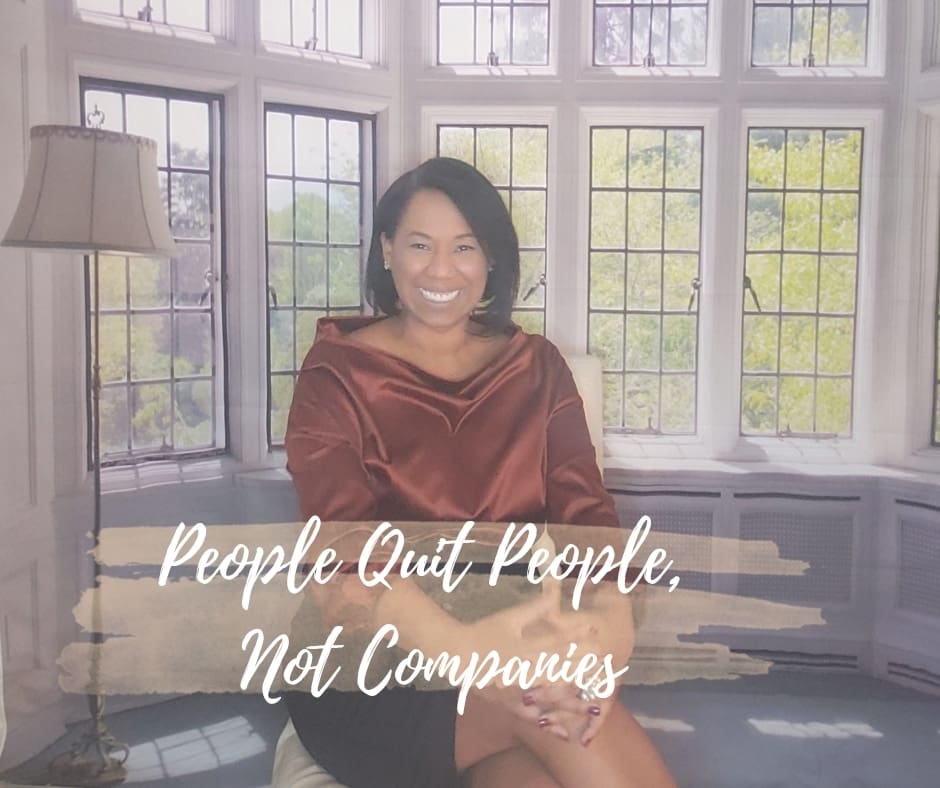
People Quit People, Not Companies

How many have ever quit their job because of a bad leader or a bad relationship at work?


As a leader, we’d like to think that when people leave , it has little to do with us. But the reality is that we are often the reason. People usually quit their leaders. The “Company” doesn’t do anything negative to them. People do.

What kind of people do employees quit?

  1. People quit people who devalue them. It is impossible to add value to someone we devalue!. If we do not respect someone, we can’t treat them with respect. When leaders devalue their people they start to manipulate them.
  2. People quit people who are untrustworthy. Have you ever worked with people you couldn’t trust? It’s a terrible experience. Nobody likes to work with someone that they can’t rely on.
  3. People quit people who are incompetent. When leaders are incompetent, they become a distraction to the team. They waste people’s energy. They prevent people from keeping the main thing, the main thing.
  4. People quit people who are insecure. If the leader values people, possesses integrity, and displays competence, then people will be content to follow, right? No, even if leaders posses those three qualities, there still one characteristic that will drive people away from them. INSECURITY. Some insecure leaders are easy to spot. Their desire for power, position and recognition comes out in an obvious display of fear, suspicion, distrust or jealousy.

No matter how good of a leader you are, you will ocacionally lose people. That’s simply a part of leadership. However, you can do things to make yourself the kind of leader that other people wants to follow.

🤚 Contact me and I can help.

Janitza Rivera

Executive Business Coach

Is it time to stay or move on?

This was the best advise I have received in my life when you have to determine if it is time to stay or move on.

This is a decision you have to make after you meet with your leader. Will you stay or will you go? May be your leader says he will change. If that turns out to be true, great. May be he says he will not change. Are you willing to live with that? May be the conversation you had with your leader did greater damage to the relationship. As someone once said: “Relationships are like glass. Sometimes is better to leave them broken than to hurt yourself trying to put them back together.” In the end you may not be able to change the people around you, but you can change the people you choose to be around.

If you are still having a hard time trying to decide whether to stay or go, ask yourself this question: If I weren’t already working here, knowing what I know now, would I want to become part of this organization? If the answer is no, it’s time to go. If the answers is “I don’t know” ask yourself again in six months. If the answer is yes, stay and learn how to work with your leader.

Janitza Rivera

Executive Business Coach

Kkoachingbusiness@gmail.com