
It is important to start at a young age and teach your child the value of reading so they will grow to practice it often and value their ability to do so.
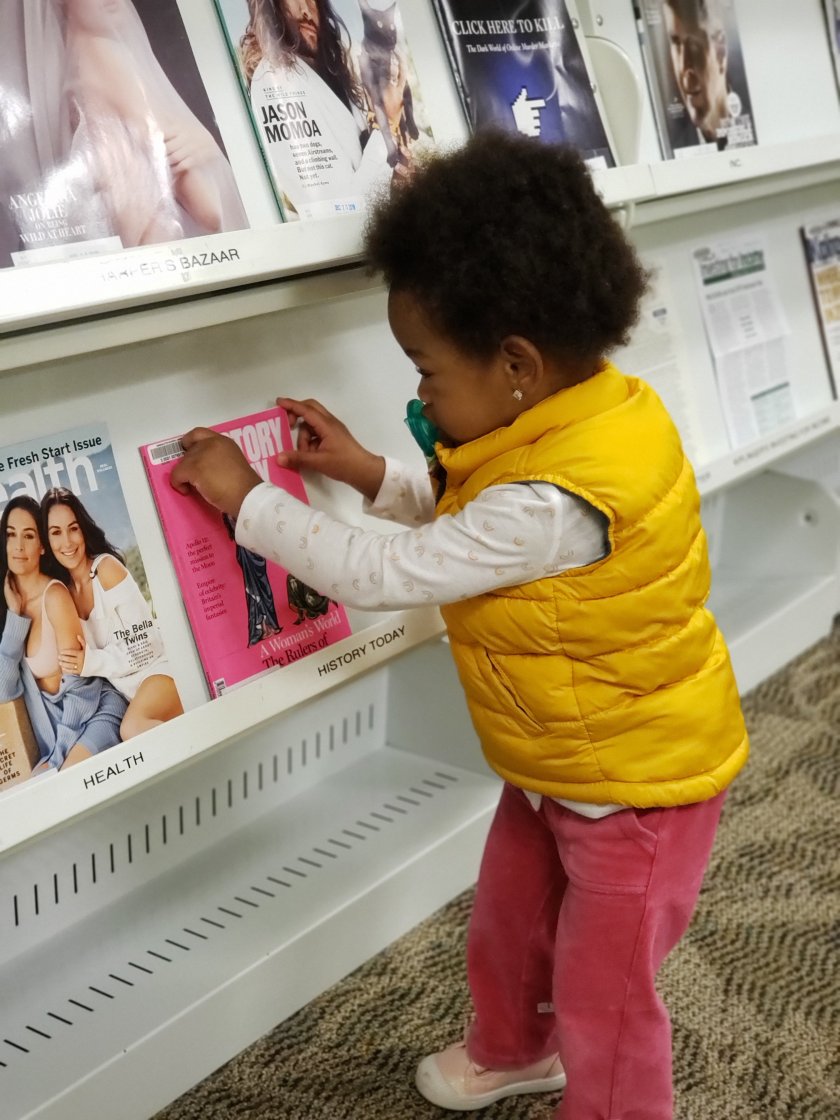









It is important to start at a young age and teach your child the value of reading so they will grow to practice it often and value their ability to do so.

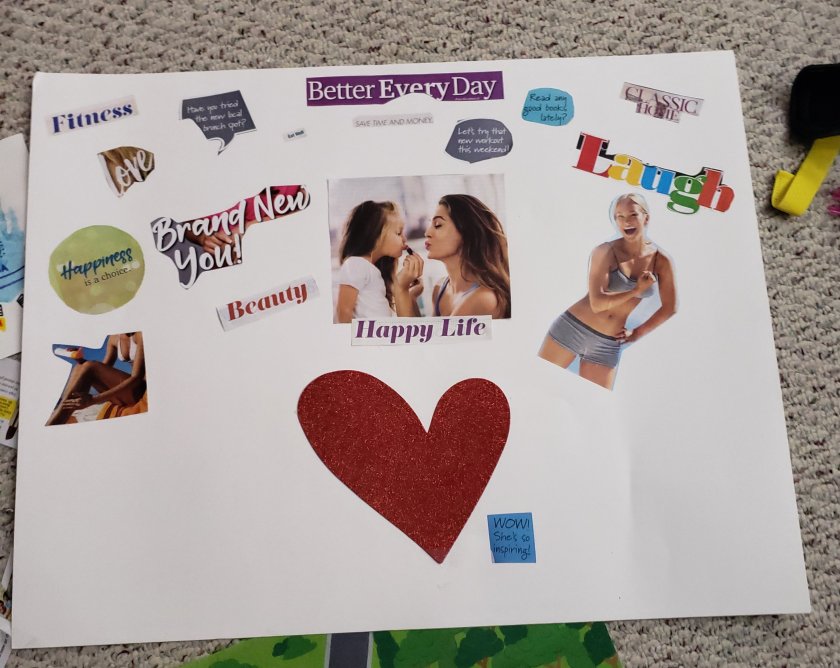



A vision board is a concrete representation of your desires and aspirations for a compelling life. They are fun to create and can serve as an invaluable tool to motivate and inspire you towards concrete daily action in pursuit of your biggest and most important life goal.
Tonight we started working on our vision board.
Here are the benefits of creating a vision board.
1.It makes your dreams clear
2. It creates a better intention
3. It makes you more creative
4. It gives you motivation
5. It makes you Productive
6. It gives you better focus
7. It increases your chances for success
8. It makes you positive and happy
9. It makes you more determined
10. It boost your self confidence
11. It relaxes you
12. It improves your self image
13. It grows your desire
When you create a vision board of the things that you want and place it where you can see often, you will essentially end up doing visualization whenever you see those pictures.
Whatever you want in your life, visualize it and create a vision board for it. No matter if it is a healthier body, a loving relationship, money, increase confidence, having a vacation in the Hawaii, or building a multi-million dollar business, you can greatly increase your chances of success through envisioning them with a vision board.
God Bless,
Jani


May this Christmas find you well, hopeful and peaceful. I hope you can celebrate doing whatever you want with the people who are important to you.
Feliz Navidad!
God bless,

JANI-
We’ve all witnessed road rage on our commutes to work. Your lane is ending and you slip over in front of that massive pickup truck only to have the driver riding your rear bumper for the next 11 miles, until he can whip around you almost taking off your front bumper.
And, of course, we all know what it feels like to be angry. But when that anger is explosive and uncontrolled, it can have negative effects on your work, relationships and health.
Wouldn’t it be better if you could choose how you respond when you’re angry rather than reacting?
Psychologists tell us that anger can be a mask for other emotions. So if you struggle with explosive anger, becoming more aware of your emotions before you explode is the key to gaining control of yourself. This takes conscious effort and practice.
Anger is a valid emotion that can’t be eliminated. Taking time to truly understand your other negative emotions (frustration, fear, jealousy, disappointment, worry, disgust, etc.) helps you respond in a controlled, more effective way. Letting colleagues know of growing concerns, frustration or worry before it escalates will help keep anger from building, allowing you to stay in control.
I hope this help you if you have anger issues. Thanks SkillPath.com for sharing.
Jani-
I recently got into a conversation with my oldest son (32 yrs old) who is about five years into his management career. As he filled me in on some of the things going on at work, I noticed in his stories that he often has co-workers and other managers asking him for advice, picking his brain, and venting their problems to him as a confidante. It hit me that his mother and I must have done something right when he was growing up because my now-adult kid is an extremely approachable manager.
Think about the managers you’ve had in your life. Most were probably average to good, a couple were outstanding, and unfortunately, some were the human personification of the Ten Egyptian Plagues. This post is about those approachable bosses, the ones that are easy to talk with even when the subject might be a bit dicey.
Approachable managers have certain traits in common. Whether you’re a boss or not, if you want to be more approachable, try to do as many of these things as possible.
Let’s be honest. If you can’t smile, the rest of this list will be nearly impossible to do, so let’s take care of our No. 1 trait right now. Several studies throughout the years show that the amount of time you smile during a conversation has a direct impact on how friendly you’re perceived to be. Also, people mimic the expressions on the faces they see, so if you smile, you’re more likely to be smiled at.
One caveat: Make it a nice warm smile, not some bizarre toothy grin.
Sure, there might be times when you are absolutely crushed with work and can’t talk, but otherwise, put aside whatever you’re doing and focus on the other person. Be easily impressed, entertained and interested. People get more pleasure from entrancing YOU with their humor and insight than from being blown away by your humor and insight.
If you can’t talk at that moment, there’s nothing wrong with a simple apology and a promise to talk as soon as your schedule opens up. That’s just one more thing that makes you approachable … and a nice person.
Lean toward people, nod, pepper the person’s conversation with affirmatives (such as, “Yes”, “I see”, or even a simple “Uh-huh”), and turn your body to face the other person’s body. Don’t turn your body away, cross your arms, or grunt monosyllabic answers like you’re a Neanderthal. And, for gosh sakes, do NOT check your phone while the other person talks. Unless your wife or partner is in the hospital about to deliver a baby, the phone stays hidden.
4. How you talk about others reflects back on you
Psychologists call it “trait transference.” It’s the phenomenon when whatever you say about other people influences how people see you. If you describe a co-worker as brilliant and charming, your colleague will tend to associate you with those qualities. Conversely, if you describe a co-worker as aggressive and obnoxious, those traits will stick to you. So watch what you say.
Showing vulnerability and a sense of humor makes you more likable and approachable. However, don’t push it too far—keep it light. Constantly insulting yourself or poking fun at your quirks makes people uncomfortable and quickly makes you the person to avoid at the office.
Because of the phenomenon of “emotional contagion,” people catch the emotions of other people, and they prefer to catch an upbeat, energetic mood. Even if you revel in the sarcastic cynic persona, you can do it with good humor and warmth and people are attracted to it. Hey, Groucho Marx became a legend doing it in Hollywood.
We’re more apt to like someone if we think that person likes us. Have you ever noticed that some celebrities and athletes are almost universally beloved because of stories of them treating fans like long-lost friends? Showing interest in another person is a powerful, powerful thing. I once had a phone interview with a hiring manager who was exceptionally pleasant during the call. The job went to someone else, but because of the way he treated me and put me at east (in an interview!!!), I smile every time I see the name of the company in the news. You cannot buy that kind of good publicity.
There’s nothing more influential at making a good impression than using the other person’s first name occasionally during the conversation. If you have trouble with names, don’t panic. You can learn some tricks to remembering names here.
In today’s work environment, the relationship people have with their boss is the No. 1 reason for staying with or leaving a company. Having approachable managers means the workforce will be more loyal and engaged and should decrease employee turnover.
Hope this help if you are a manager or wanting to be one. I thought I will share since it has some good points.
Jani-

I love to cook. When I have time that is. I made this wonderful recipe for work and it turned out very good.
Feta cheese
Tomatoes
Green Onions
Olive Oil
Balsamic Vinegar
Enjoy the recipe
God Bless,
Jani
Crown Council was designed to be a significant team experience. This event provides education, motivation and skill training that empowers dental teams with the knowledge of how to create a culture in their practice that will bring them financial and personal success.
We are almost there. We have all the team members that wants to participate in this awesome event ready. We are anxiously waiting for the date to come.
Thank you to all of you that participated in earning your seat.
We had so much fun while doing it.
Let me share with you what some of us did.
1. Learn and grow: Few employees attended to Leadership Academy in Texas, Dr. Whiting and I attended to sleep Apnea Course in Texas, I attended to a women’s leadership Symposium at Mary Baldwin University, Dr. Rockey attended to ASA classification training and I have few others that attended to New Patient Workshop and read a book and teach about it.
2. Volunteer work: A team member volunteered at church every second Sunday of the month with kids, Dr. Ash volunteered with church duties at church, Another member volunteered at church girl’s camp, Becky volunteered at a yard sale for Haiti, and Erica volunteered at her church vacation bible school.
3. Acknowledge and Recognize Teammates: There was a lot of recognition traveling around the office for sure. Notes, candy, gifts, verbal appreciation, secret appreciation, breakfast, lunch, treats, snacks, you name it….
Overall it was a great experience for everyone to be able to learn and share the experience of what it takes to earn a crowncouncil seat. There were more than just three items. I figured I’ll share just a few.
God Bless,
Jani





 Let's Be Real Authentic with Janitza